Alternatively, the remnant of an ancient article would work.
Conlang Random Thread
Re: Conlang Random Thread
Re: Conlang Random Thread
That would definitely do it.
Yaaludinuya siima d'at yiseka wohadetafa gaare.
Ennadinut'a gaare d'ate eetatadi siiman.
T'awraa t'awraa t'awraa t'awraa t'awraa t'awraa t'awraa.
Ennadinut'a gaare d'ate eetatadi siiman.
T'awraa t'awraa t'awraa t'awraa t'awraa t'awraa t'awraa.
Re: Conlang Random Thread
What would be the former grammatical function of the article?
Based on the fossilized obviation idea (which would become the i-stem), would this distribution principle make sense?
1) most human animates are a-stem (humans are generally the most salient in utterances/sentences/speech acts)
2) most nonhuman animates are equally a-stem or i-stem
3) most concrete inanimates are a-stem (most utterances/sentences/speech acts involve agents acting upon physical objects or animates, thus more often salient than abstracts)
4) most abstract inanimates are i-stem
And there is room for random assignments that do not align with these principles (the two words for fire are both i-stem simply because)
Re: Conlang Random Thread
I was thinking about a postposed definite article, becoming generalized and more or less meaningless over time. There are examples in Aramaic nouns and (IIRC) proto Germanic adjectives.Ahzoh wrote: ↑Wed Jul 08, 2026 7:42 pmWhat would be the former grammatical function of the article?
Based on the fossilized obviation idea (which would become the i-stem), would this distribution principle make sense?
1) most human animates are a-stem (humans are generally the most salient in utterances/sentences/speech acts)
2) most nonhuman animates are equally a-stem or i-stem
3) most concrete inanimates are a-stem (most utterances/sentences/speech acts involve agents acting upon physical objects or animates, thus more often salient than abstracts)
4) most abstract inanimates are i-stem
And there is room for random assignments that do not align with these principles (the two words for fire are both i-stem simply because)
That said, the distribution principle makes sense! Your description also made me think of earlier nominative/oblique or agent/patient case system. (as you describe it, the -a stem more or less correlates with an agent role); I don't know if that makes sense in your context.
Re: Conlang Random Thread
What happened in proto-Germanic is something else. PIE already used n-stems for individualising (e.g., forming personal names from general nouns), Germanic ran with that by creating definite adjectives formed as n-stems to existing adjectives (e.g., in PIE terms, *new-o- "new" => *new-on-), where the non n-stem adjectives became indefinite. In German, this distinction is still alive; in English it was lost due to the general erosion of inflection, in other Germanic languages that I know it still works at least to some degree.
This may have been an areal thing, Balto-Slavic also created a difference between definite and indefinite adjectives, by postponing the relative pronoun *yo-. This difference was then lost or re-interpreted as something else than definite-indefinite in most of the modern Slavic languages, but it is visible in the older stages (e.g., in OCS) and survives till date in Lithuanian. So this actually is closer to what you assumed for Germanic.
Re: Conlang Random Thread
Ah, thanks! I had only vague memories of the process in proto-Germanichwhatting wrote: ↑Thu Jul 09, 2026 3:45 amWhat happened in proto-Germanic is something else. PIE already used n-stems for individualising (e.g., forming personal names from general nouns), Germanic ran with that by creating definite adjectives formed as n-stems to existing adjectives (e.g., in PIE terms, *new-o- "new" => *new-on-), where the non n-stem adjectives became indefinite. In German, this distinction is still alive; in English it was lost due to the general erosion of inflection, in other Germanic languages that I know it still works at least to some degree.
This may have been an areal thing, Balto-Slavic also created a difference between definite and indefinite adjectives, by postponing the relative pronoun *yo-. This difference was then lost or re-interpreted as something else than definite-indefinite in most of the modern Slavic languages, but it is visible in the older stages (e.g., in OCS) and survives till date in Lithuanian. So this actually is closer to what you assumed for Germanic.
 (and I didn't know about Balto-Slavic at all!)
Re: Conlang Random Thread
In languages with only tenuis vs aspirated distinction in obstruents, would tenuis be more frequent than aspirated? Would that be uniformly across all stops or would some aspirated be able to more frequent than their tenuis counterpart?
I reckon aspirated stops are more marked and thus likely to be less frequent; however, I'm contemplating a change where the ejective series merge with the voiced series to create a tenuis series while the original plain series become aspirated, similar to the outcome of a dialect of Armenian. This would result in aspirated stops being more common than tenuis stops, despite being ostensibly more marked than tenuis stops.
I reckon aspirated stops are more marked and thus likely to be less frequent; however, I'm contemplating a change where the ejective series merge with the voiced series to create a tenuis series while the original plain series become aspirated, similar to the outcome of a dialect of Armenian. This would result in aspirated stops being more common than tenuis stops, despite being ostensibly more marked than tenuis stops.
Re: Conlang Random Thread
I’m really not aware of any universals about this. It depends entirely on the language. I see no problem with having aspirated stops more common than tenuis ones.
Conlangs: Scratchpad | Texts | antilanguage
Software: See http://bradrn.com/projects.html
Other: Ergativity for Novices
(Why does phpBB not let me add >5 links here?)
Software: See http://bradrn.com/projects.html
Other: Ergativity for Novices
(Why does phpBB not let me add >5 links here?)

Re: Conlang Random Thread
Pretty much, yes, though one could argue the distinction there isn’t purely tenuis vs aspirated, but something more complicated.
Conlangs: Scratchpad | Texts | antilanguage
Software: See http://bradrn.com/projects.html
Other: Ergativity for Novices
(Why does phpBB not let me add >5 links here?)
Software: See http://bradrn.com/projects.html
Other: Ergativity for Novices
(Why does phpBB not let me add >5 links here?)
Re: Conlang Random Thread
Well, I'd say that tenuis plosives are an allophone of aspirated ones after "s" and word-final, so one could argue tenuis plosives don't exist as phonemes at all? Which is the ultimate case of "more common" I guess.
JAL
Re: Conlang Random Thread
I was referring to the fact that the so-called ‘voiced’ stops in English are more often tenuis rather than fully voiced. Allophony is something a bit different to what Ahzoh was talking about, I think…
Conlangs: Scratchpad | Texts | antilanguage
Software: See http://bradrn.com/projects.html
Other: Ergativity for Novices
(Why does phpBB not let me add >5 links here?)
Software: See http://bradrn.com/projects.html
Other: Ergativity for Novices
(Why does phpBB not let me add >5 links here?)
-
WeepingElf

- Posts: 2477
- Joined: Sun Jul 15, 2018 12:39 pm
- Location: Braunschweig, Germany
- Contact:
Re: Conlang Random Thread
Certainly, Germanic voiceless and voiced stops are different from e.g. Romance ones, and my personal theory about the origin of the High German consonant shift has to do with that. My idea is that this shift happened when the people in southern Germany shifted from Latin to Germanic in the times of the Völkerwanderung. They rendered the Germanic voiceless stops, which were aspirated in most contexts, as something like affricates, and the voiced stops as voiceless. And thus the High German consonant shift took place.
Re: Conlang Random Thread
In the English I am familiar with, the system is more complex than that:bradrn wrote: ↑Tue Jul 14, 2026 1:18 pmI was referring to the fact that the so-called ‘voiced’ stops in English are more often tenuis rather than fully voiced. Allophony is something a bit different to what Ahzoh was talking about, I think…
- Initially, or at the start of stressed syllables, fortis plosives are aspirated and lenis plosives are tenuis outside careful speech.
- When otherwise in a syllable onset and not intervocalic, fortis plosives and lenis plosives both tend to be tenuis outside careful speech.
- When at the start of an unstressed syllable and intervocalic, fortis plosives are tenuis and lenis plosives are voiced, except that both /t/ and /d/ are typically flapped.
- When in a syllable coda and directly after a vowel or separated from a vowel by a nasal or liquid, fortis plosives are preglottalized or glottalized and lenis plosives are tenuis.
- When in a syllable coda and separated from a vowel by a fricative or plosive, both fortis plosives and lenis plosives are tenuis.
Yaaludinuya siima d'at yiseka wohadetafa gaare.
Ennadinut'a gaare d'ate eetatadi siiman.
T'awraa t'awraa t'awraa t'awraa t'awraa t'awraa t'awraa.
Ennadinut'a gaare d'ate eetatadi siiman.
T'awraa t'awraa t'awraa t'awraa t'awraa t'awraa t'awraa.
Re: Conlang Random Thread
I know it’s complex in general, which is why I said ‘more often’, and why I didn’t mention Germanic at all in my original post.Travis B. wrote: ↑Tue Jul 14, 2026 4:26 pmIn the English I am familiar with, the system is more complex than that:
Conlangs: Scratchpad | Texts | antilanguage
Software: See http://bradrn.com/projects.html
Other: Ergativity for Novices
(Why does phpBB not let me add >5 links here?)
Software: See http://bradrn.com/projects.html
Other: Ergativity for Novices
(Why does phpBB not let me add >5 links here?)
Re: Conlang Random Thread
I've been trying to come up with distribution rank of phonemes for a word generator to save me time on manually filtering unacceptable words.
But I find it hard to come up with a natural phoneme distribution, questions abound such as "how much more frequent are aspirated consonants than unaspirated?", "are plain stops more frequent than affricates?", "how common are lateral obstruents within a language?"
I am sure relative articulatory complexity and markedness is involved, but it's a complex and inexact science.
For inspiration, I had found some consonantal frequencies of some languages
Armenian (from http://simia.net/letters/, based on corpora from Armenian language wikipedia pages)
[high] n ɾ m k t j v s l h tʰ ɡ d tsʰ b p kʰ ʁ ts ʃ z r χ dʒ tʃʰ ʒ pʰ dz f tʃ [low]
Urartian (from analyzing a dictionary of 605 entries)
[high] s n r d l tʰ x m b j tsʰ kʰ w pʰ g dz kʼ tsʼ tʼ [low]
Amharic (found in a paper analyzing lexical roots of 1200-1300 words, ∅ = null-initial, for those words beginning with a vowel)
[high] r t m l b s n ∅ d kʼ tʼ g f k w ʒ j ʃ h t͡ʃʼ d͡ʒ ɲ t͡ʃ gʷ sʼ kʼʷ ʔ z kʷ hʷ pʼ mʷ fʷ p bʷ [low]
Unsurprisingly, liquids/nasals are overwhelmingly common. But the distribution of the obstruent series are interesting.
At least for me, I have something of a series of relative frequencies:
[high] n > r > m > l > ŋ [low]
[high] k > t > p > t͡s > t͡ɬ [low]
[high] tʰ > kʰ > t͡sʰ > pʰ > t͡ɬʰ [low]
[high] s > ɬ > x > f [low]
Word-Initial Onset:
[high] ʔ > ħ = h > j = w [low]
Else:
[high] j = w > ħ = h > ʔ [low]
(result of merger of voiced stops and ejectives)
[high] p > pʰ [low]
[high] tʰ > t [low]
[high] tsʰ > ts [low]
[high] tɬʰ > tɬ [low]
[high] kʰ > k [low]
But I find it hard to come up with a natural phoneme distribution, questions abound such as "how much more frequent are aspirated consonants than unaspirated?", "are plain stops more frequent than affricates?", "how common are lateral obstruents within a language?"
I am sure relative articulatory complexity and markedness is involved, but it's a complex and inexact science.
For inspiration, I had found some consonantal frequencies of some languages
Armenian (from http://simia.net/letters/, based on corpora from Armenian language wikipedia pages)
[high] n ɾ m k t j v s l h tʰ ɡ d tsʰ b p kʰ ʁ ts ʃ z r χ dʒ tʃʰ ʒ pʰ dz f tʃ [low]
Urartian (from analyzing a dictionary of 605 entries)
[high] s n r d l tʰ x m b j tsʰ kʰ w pʰ g dz kʼ tsʼ tʼ [low]
Amharic (found in a paper analyzing lexical roots of 1200-1300 words, ∅ = null-initial, for those words beginning with a vowel)
[high] r t m l b s n ∅ d kʼ tʼ g f k w ʒ j ʃ h t͡ʃʼ d͡ʒ ɲ t͡ʃ gʷ sʼ kʼʷ ʔ z kʷ hʷ pʼ mʷ fʷ p bʷ [low]
Unsurprisingly, liquids/nasals are overwhelmingly common. But the distribution of the obstruent series are interesting.
At least for me, I have something of a series of relative frequencies:
[high] n > r > m > l > ŋ [low]
[high] k > t > p > t͡s > t͡ɬ [low]
[high] tʰ > kʰ > t͡sʰ > pʰ > t͡ɬʰ [low]
[high] s > ɬ > x > f [low]
Word-Initial Onset:
[high] ʔ > ħ = h > j = w [low]
Else:
[high] j = w > ħ = h > ʔ [low]
(result of merger of voiced stops and ejectives)
[high] p > pʰ [low]
[high] tʰ > t [low]
[high] tsʰ > ts [low]
[high] tɬʰ > tɬ [low]
[high] kʰ > k [low]
-
Man in Space

- Posts: 2597
- Joined: Sat Jul 21, 2018 1:05 am
Re: Conlang Random Thread
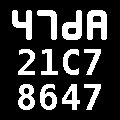
RIHGI ‘to lose’ (17-stroke character)

EDIT: Better version—

EDIT: Better version—

Re: Conlang Random Thread
I get the feeling that having more aspirated than unaspirated stops by frequency is historically unstable, which doesn't stop languages getting into that position. However, I would expect a slow correction of the distribution. One mechanism, seen in some Southern Thai dialects, is for stops to deaspirate in tones where aspiration has a very low functional load.
The assortment of phonemes in Thai in general is very non-random. The most obvious features are due to the past millennium's sound changes, and I suspect much of the rest goes back to older sound changes and characteristics of donor languages, as in English.
-
/ˌnɐˈɾɛndɚduːd/
- Posts: 369
- Joined: Tue Feb 11, 2025 7:47 pm
- Location: now you see me, now you
Re: Conlang Random Thread
the stroke order seems quite random, is there some specific pattern or set of rules?
also known as, 'notenderdude' or any variation thereof.
terminally in search of who asked.
terminally in search of who asked.
Re: Conlang Random Thread
My thoughts as well. Although some scripts like hanzi do have required stroke orders, they usually follow general patterns like top to bottom and left to right. It seems quite awkward to jump around from one part of the glyph to another adding one line at a time to each section. Imagine what would happen in rapid cursive writing./ˌnɐˈɾɛndɚduːd/ wrote: ↑Wed Jul 15, 2026 10:41 amthe stroke order seems quite random, is there some specific pattern or set of rules?
Intelligentia artificiālis dēlenda est.
Idiot America | He/him
Idiot America | He/him